
Patimokkha and Garudhamma
 Buddhism is a profound ideology. However for the last few centuries it has been enshrouded in inaccuracy. These inaccuracies linger on from the misreadings of past colonial scholarship. Unfortunately even today due to the nature of institutional education [mentorship etc.] this extreme reliance on the past scholarship is preventing correct perspective in the study of this profound ideology.
A look at the textual description by the Buddhist text on the topic on Patimokkha and Garudhamma will reveal the shortcomings in the understanding of contemporary scholarship on these topics [both orthodoxy and Orientology]. Their simplistic interpretations are not true to Buddhism.
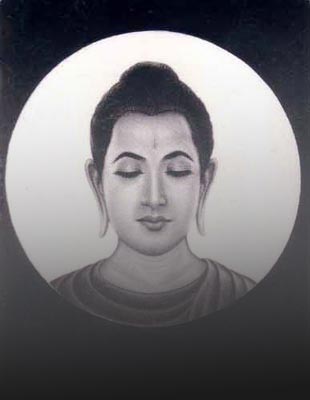 Buddhism is apparently a science outside the fold of the Veda. However, to the Vedists, Buddhism is only another reconciliation of the Vedic philosophy (see Third Eye of the Buddhist). The Veda is the oldest extant scripture on philosophical science that is not preclusive to any one race or political group but rather is the legacy of humankind (see Divine Initiation). It is due to this single reason that many cultures have the Buddha presented with the Vedic metaphysical entities as Shiva, Vishnu, Indra, and Brahma.
 In India, the Goddess Sita and God Ram have long been considered the ideal role models of husband and wife. This is despite that Sita and Rama are clearly metaphysical presentations. Though they represent another of the principles (tattvas) of creation, they have nevertheless been interpreted literally over generations both in the East and West. Whole studies have sprung up discussing the ideal couple just in gender terms alone. According to the literal reading, in Sita we have the ideal women: her husband is god, friend and guru. Even when entering the fire (agni pariksha) to prove her chastity to Ram after her return from Lanka where she was held by the Demon Ravana, Sita portrays the ideal women by bearing Ram's cruelty silently. According to the actual interpretation that is unknown, this narrative explains the manifestation of Purusha and Prakriti. Sita entering into flames denotes that Prakrti (rudimentary manifestation of matter) in the Ramayana is Agni. Therefore, Sita returns to Agni at the end of the world cycle. Rama is known as Maryada Purushottam or the limited Purusha or Being or Spirit and is like Christ.
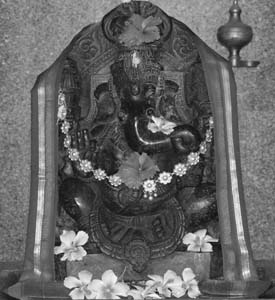 The Veda forms the core doctrine of Indic Spiritualism. The Veda is an ancient legacy shared by humankind [see Divine Initiation]. It is still the earliest existing text of Spiritualism. The Veda, Tao, Torah, Testament, Koran etc. belong to all humanity. Knowing this, India has always had a plurality of religious cultures.
 Yoga Vijnana means the “Science of Yoga.”
